
Tyler summers don't politely announce themselves. One week it's pleasant, the next it's 98°F with humidity that makes the air feel like a wet towel. And when the heat arrives — usually by late May and sticking around through September — your electric bill arrives right behind it.
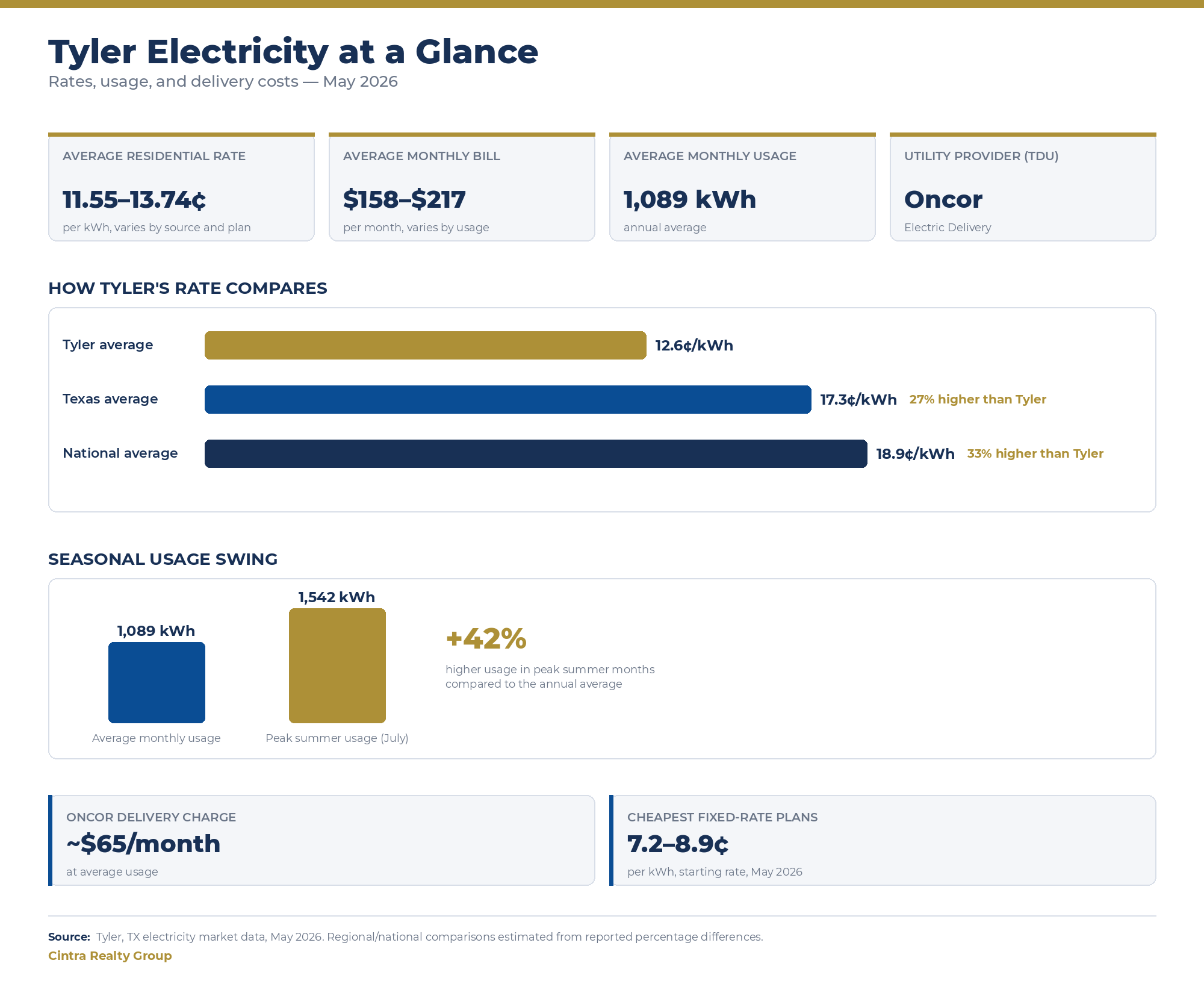
The average Tyler household uses about 1,089 kWh per month across the year. In July, that number jumps to approximately 1,542 kWh — a 42% increase driven almost entirely by air conditioning.
At current Tyler electricity rates, that July bill can easily push past $200–$250 if you're not paying attention. But it doesn't have to. Here's what tenants and property owners can do — starting now, before summer peaks.
First, Understand How Electricity Works in Tyler
Tyler is in a deregulated electricity market, which means you choose your own retail electricity provider. Your utility — Oncor Electric Delivery — handles the power lines, meter reading, and outage restoration. They charge the same delivery fee regardless of which provider you pick. But your per-kWh energy rate? That's up to you.
Sources: Choose Energy – Tyler (https://www.chooseenergy.com/electricity-rates/texas/tyler/) | EnergySage – Tyler (https://www.energysage.com/local-data/electricity-cost/tx/smith-county/tyler/) | Watt Owl – Tyler (https://www.wattowl.com/cities/tyler) | Texas Electricity Ratings – Tyler, April 2026 (https://www.texaselectricityratings.com/electricity-rates/texas/tyler)
That 27% below the state average sounds like good news — and it is — but it doesn't protect you from a $300 July bill if your HVAC is working overtime in a poorly sealed unit.
For Tenants: 7 Things You Can Do Right Now
1. Shop your electricity plan before summer hits.
If you're on a variable-rate plan, your rate changes monthly — and it spikes when demand spikes. Summer is the worst time to be on a variable plan. Right now (May) is the window to lock in a fixed rate before summer pricing kicks in.
Texas Electricity Ratings' energy analysts recommend locking in a fixed-rate plan during spring: "We're smack dab in the middle of the last window to shop for electricity unless you're willing to pay for sky-high summer energy rates."
The cheapest fixed-rate plans in Tyler as of May 2026 start around 7.2–8.9 ¢/kWh for 12–15 month contracts. Compare plans at PowerToChoose.org, EnergyBot, or ChooseEnergy.
2. Set your thermostat to 78°F when you're home, higher when you're not.
Every degree below 78°F increases your cooling costs by roughly 3–5%. Setting it at 72°F instead of 78°F costs you 18–30% more on the cooling portion of your bill. If you're leaving for work, bump it to 82–85°F or use a programmable schedule.
3. Close blinds on south- and west-facing windows during the afternoon.
Direct sunlight heating a room forces your AC to work harder. Blackout curtains or even basic blinds closed during peak sun hours (roughly 1–6 PM in Tyler) can reduce indoor heat gain noticeably.
4. Change your HVAC filter.
A clogged filter forces the system to work harder, use more electricity, and cool less effectively. Check it monthly during summer. Most filters cost $5–$15 and take 30 seconds to replace. If you're renting and the filter hasn't been changed, submit a maintenance request — this is part of standard property upkeep.
5. Use ceiling fans to supplement, not replace, your AC.
Fans don't cool the air — they cool your skin through evaporation. Running a ceiling fan lets you set your thermostat 2–4°F higher without feeling warmer. But turn them off when you leave the room — a fan cooling an empty room is just burning electricity.
6. Run appliances at night.
Your dishwasher, washer, and dryer all generate heat. Running them during the hottest part of the day forces your AC to compensate. Shift these to evening hours — after 9 PM — when the outdoor temperature drops and your AC isn't working as hard.
7. Check for air leaks.
Gaps around windows, doors, and even electrical outlets let cool air escape. If your apartment feels drafty near windows or doors even with the AC running, mention it to your property management team. Weather stripping and caulking are inexpensive fixes that significantly reduce energy waste.
For Property Owners: 5 Things That Protect Your Investment (and Your Tenants)
1. Service HVAC systems now — before June.
The Better Business Bureau just reminded Tyler-area property owners and residents that now is the time for annual HVAC tune-ups. A system that hasn't been serviced will run less efficiently, break down during peak heat, and generate emergency maintenance calls that cost more than a spring check-up.
For property owners: a mid-summer HVAC failure is one of the top reasons tenants don't renew. It's also a habitability issue under Texas law — if the AC goes out and it affects health and safety, you have 3 days to address it after written notice.
2. Replace filters across all units.
This is inexpensive, fast, and directly reduces your tenant's electricity consumption — which reduces complaints and improves retention. At Cintra, filter replacements are part of our standard seasonal maintenance protocol.
3. Check weatherstripping and seals on exterior doors and windows.
A 15-year-old rental home with original weatherstripping is leaking cool air. Replacing it costs $50–$100 per unit and pays for itself in reduced HVAC strain within weeks during a Tyler summer.
4. Consider smart thermostats for your units.
A smart thermostat (Nest, Ecobee, or similar) costs $100–$250 installed and can reduce cooling costs by 10–15% through automated scheduling. For a property owner, it's a marketable amenity and a practical investment. Properties advertising gigabit internet and smart thermostats lease up faster in 2026.
5. Communicate with your tenants about summer expectations.
A simple message — reminding tenants to change filters, close blinds during peak hours, and report any HVAC issues immediately — goes a long way. It shows you're paying attention, and it prevents small problems from becoming expensive ones in August.
The Monthly Budget Math
Here's what a Tyler renter should budget for electricity by season:
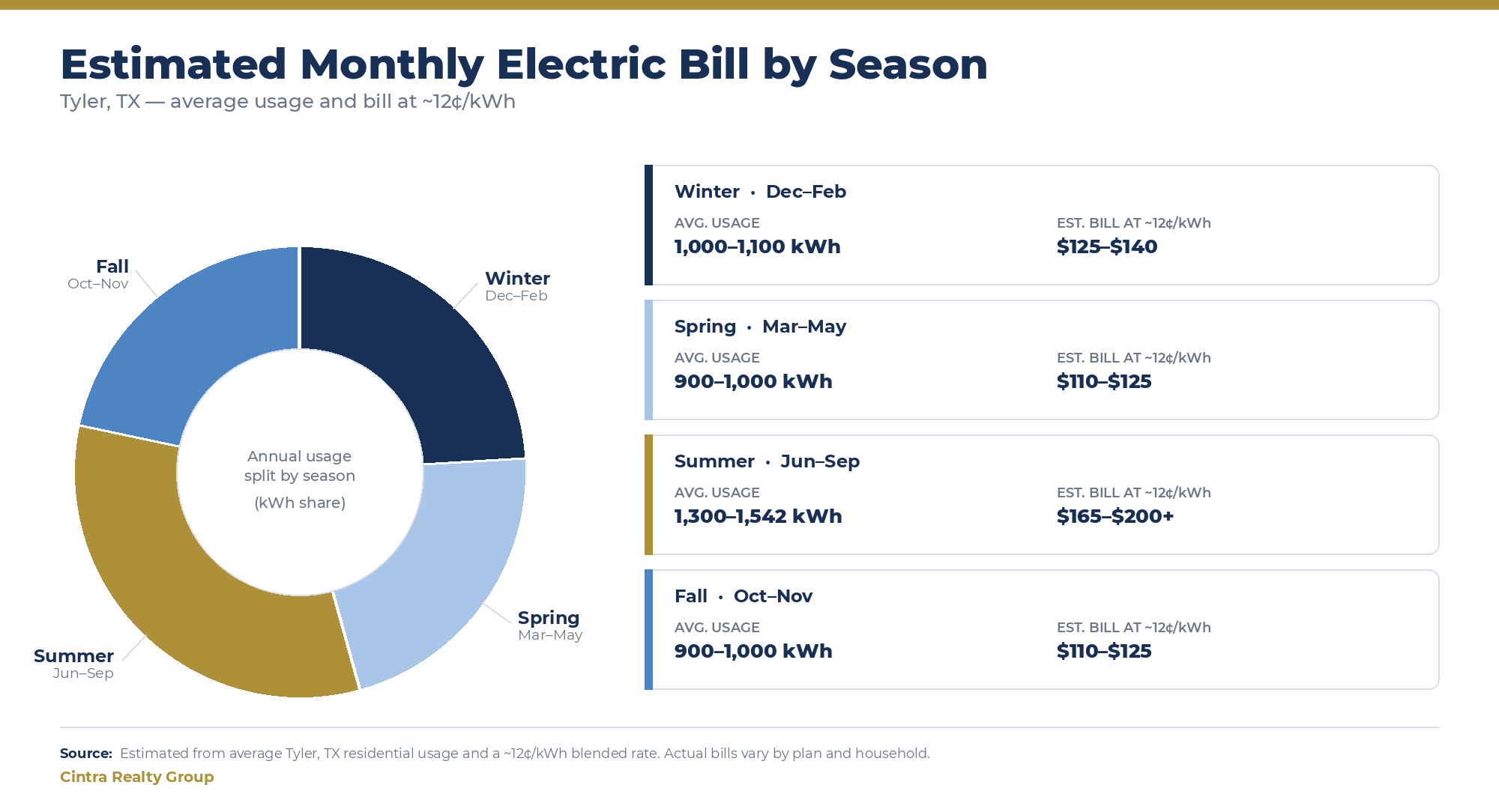
Estimates based on Watt Owl and EnergySage data for Tyler (2026). Actual bills vary by plan, usage, and unit efficiency.
Sources: Watt Owl – Tyler (https://www.wattowl.com/cities/tyler) | EnergySage – Tyler (https://www.energysage.com/local-data/electricity-cost/tx/smith-county/tyler/)
The jump from spring to summer can be $50–$75/month or more. That's not pocket change for a renter on a budget — and it's a retention risk for owners if tenants feel blindsided.
A Note on All-Bills-Paid Units
Tyler has over 200 apartment listings advertising "utilities included" or "all bills paid." For renters considering these, pay attention to whether there's a usage cap or if the electricity is genuinely unlimited. Some properties include utilities only up to a certain kWh threshold, then charge overages. Ask before you sign.
Beat the Heat, Not Your Budget
Tyler's summers are a given. Your electric bill doesn't have to be. For tenants: shop your rate now, manage your thermostat, and communicate with your property manager about HVAC concerns. For owners: service systems before they fail, invest in efficiency, and treat summer maintenance as a retention strategy.
Cintra Realty Group handles seasonal HVAC maintenance, filter replacements, and emergency work orders across all managed properties — with in-house maintenance and 48-hour standard response times.
Browse available rentals: https://cintra.appfolio.com/listings/listings
Submit a maintenance request: https://cintra.appfolio.com/connect
Contact us: https://www.cintrarealty.com/contact-us
Call: 903-705-1000